 The refrain of a popular Russian song runs: "Sometimes people dream of light-blue cities..." In Russian, the word "blue" is also an euphemism to designate gay people, which renders the meaning of the refrain ambiguous. "Blue" cities, giant megapolicies, where gay life has always been much more developed and visible than elsewhere never failed to attract young and ambitious gay people from the provinces. No less are they attractive for the researchers.
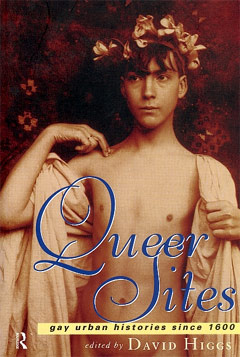
Queer Sites is a history of gay space in seven of the world's major cities from the early modern period to the present. The book focuses on the changing nature of queer experience in London, Amsterdam, Rio de Janeiro, San Francisco, Paris, Lisbon and Moscow, and examines the transition from the sexual furtiveness of centuries when male homosexual behaviour was criminal, to the open affirmation of gay identities in the 1990s.
Below we present to your attention several extracts from the chapter on gay history of Moscow written by Dr Dan Healey. Dr Dan Healey was Research Fellow at the Wellcome Unit for the History of Medicine at the University of Glasgow, UK. He has published scholarly articles on Russian history, and a broad range of gay journalism.
Presently Dr Dan Healey is Lecturer in Russian History at University of Wales Swansea, and his book on the history of homosexuality in tsarist and Soviet Russia, Homosexual Desire in Revolutionary Russia: The Regulation of Sexual and Gender Dissent, will be published by University of Chicago Press (in English) in Summer 2001. It will be available from our bookstore.
If you got interested and wish to read the entire book, please purchase it from Amazon - soon it will be in your mailbox. Feel free to check out our selection of other titles on the Russian gay history and culture.
Queer Moscow